Taking the Xsolla Gold Gift Card to a new retail audience: positioning and GTM.
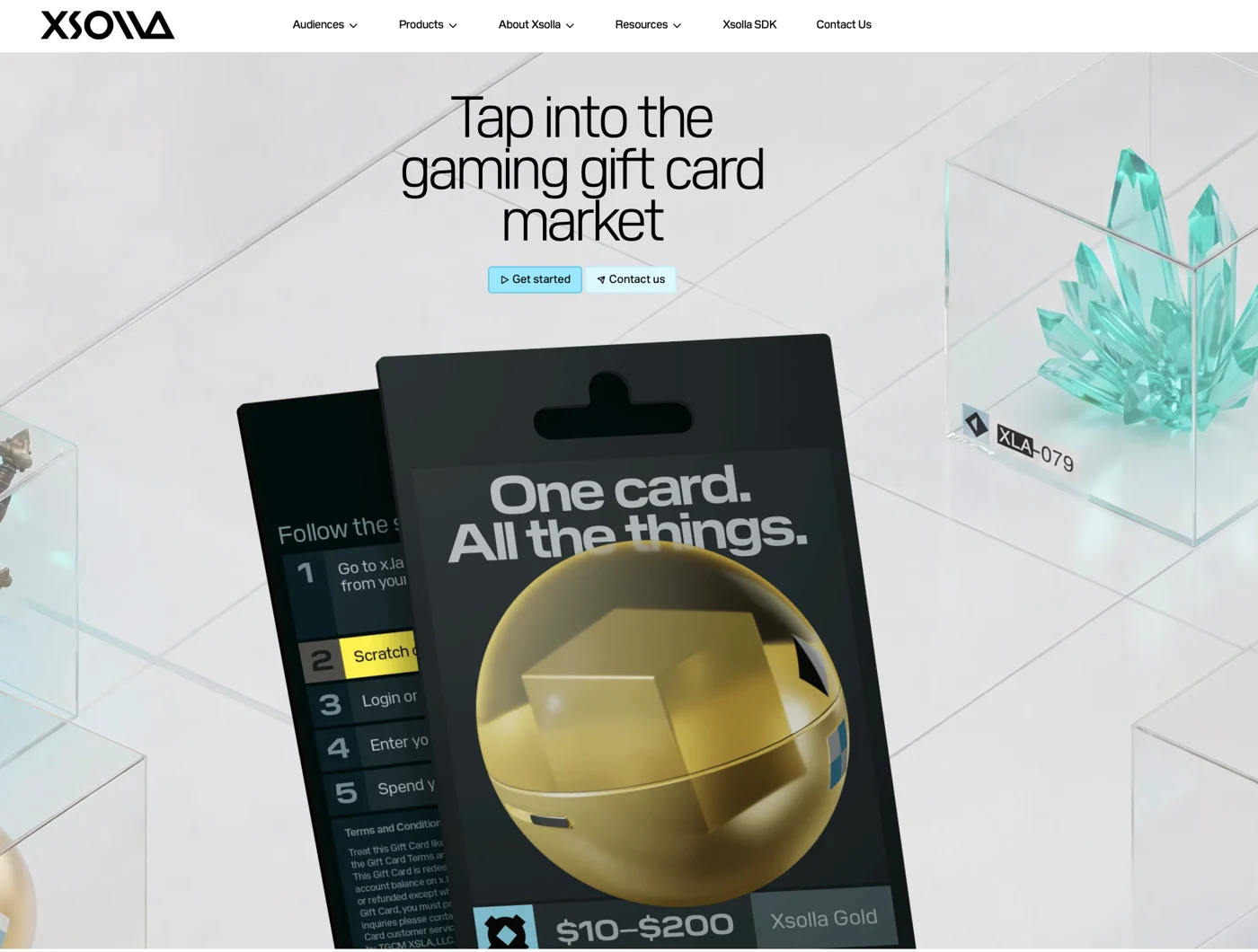
A product marketing case: how I positioned the Xsolla Gold Gift Card for a new retail audience and took it to market, research through GTM.
Context
Xsolla grew up around one core audience. As that audience and the product line widened, one-size framing stopped working: each product needed its own positioning and its own reason to matter to a specific buyer.
The Xsolla Gold Gift Card was one of those products, and it is worth a line, because "gift card" sells it short. Xsolla Gold is a payment product that makes buying inside games simpler, on the rails Xsolla has run for developers for years. The card is its retail form, and one of the core pieces of the company's fintech stack, not a standalone piece of plastic.
My brief was retail: the stores and marketplaces that sell gift cards, and a reason for them to stock this one.
Challenge
Retail is a crowded shelf. The card was up against large ecosystem players and a wave of newer payment products, all after the same space. So two things had to land: the niche this card could actually own, and the pitch to a buyer who does not forgive a vague one.
Retail buyers are picky for a living. Every cent of margin and every centimeter of shelf has to earn its keep, so the card had to make that math obvious, and fast.
Approach
I ran this as one loop, not a stack of deliverables, with the retail buyer in the middle of every call.
That middle was not guesswork. I have spent real time in retail: brick-and-mortar at MediaMarkt Saturn and marketplace scale at Alibaba Group, across several markets. It taught me what retail expects and where it hurts, and who the buying personas are, and what turns a card from another SKU on the shelf into one a buyer actually wants to stock.
- Audited the card with the product team: what it already did, against what a retail buyer actually needs.
- Ran a market and competitor read on comparable cards and payment products, and on how they position, to find the gap worth taking.
- Turned that into a development roadmap for the retail push.
- Set the go-to-market: which buyers to reach first, and with what.
- Wrote the new benefits and the channels for the retail audience, the positioning the public page now leads with.
The honest split: the market and competitor work, the positioning, the roadmap and the GTM were mine. Some of the audience insight came from the product manager who owns the card.
Outcome & proof
Under NDA
The numbers are under NDA, so this is the thinking, not the dashboard.
What shipped is public. The positioning, the retail benefit framing and the buyer split (product, marketing and marketplace operators) are live on Xsolla's retailers page, and Retailers is now a standing audience in the site's top navigation.

For sizing I used public figures, and kept them labeled as market data rather than results of this launch: gaming is one of the fastest-growing gift-card segments, tracking toward roughly 60 billion dollars by 2032.
Promotion across those channels is rolling out gradually. We are researching and optimizing the approach, and putting the messaging to the test with each campaign.
Reflection
The research was the easy half. The hard half was turning one product into a story that three very different retail buyers, product, marketing and marketplace, could each read as theirs. It got personal, too: the project pulled me in far enough that I built my EMBA graduation project at ESMT Berlin around it.